
We only touch on the subject below. If you’d like to organise a staff training session ahead of the sparkling season, just reach out—we’d love to help!
Regions
As specialists in Italian wine, we feature a wide range of sparkling styles. Prosecco is a key focus (check out our deep dive here if you missed it). In addition to Prosecco DOC and DOCG wines, we also offer Pinot Nero from Oltrepò Pavese, located in Lombardy, south of Milan. There’s Bellussi’s 100% Chardonnay from Trentino Alto Adige in the foothills of the Dolomites. Italy’s competitors to Champagne are Franciacorta and Alta Langa. The former is a 3000ha premium region (less than a tenth the size of Champagne), with mineral-rich glacial soils and alpine climate; and the latter from Piemonte’s hills, with calcareous clay soils and limited production (about 1/20th that of Franciacorta).
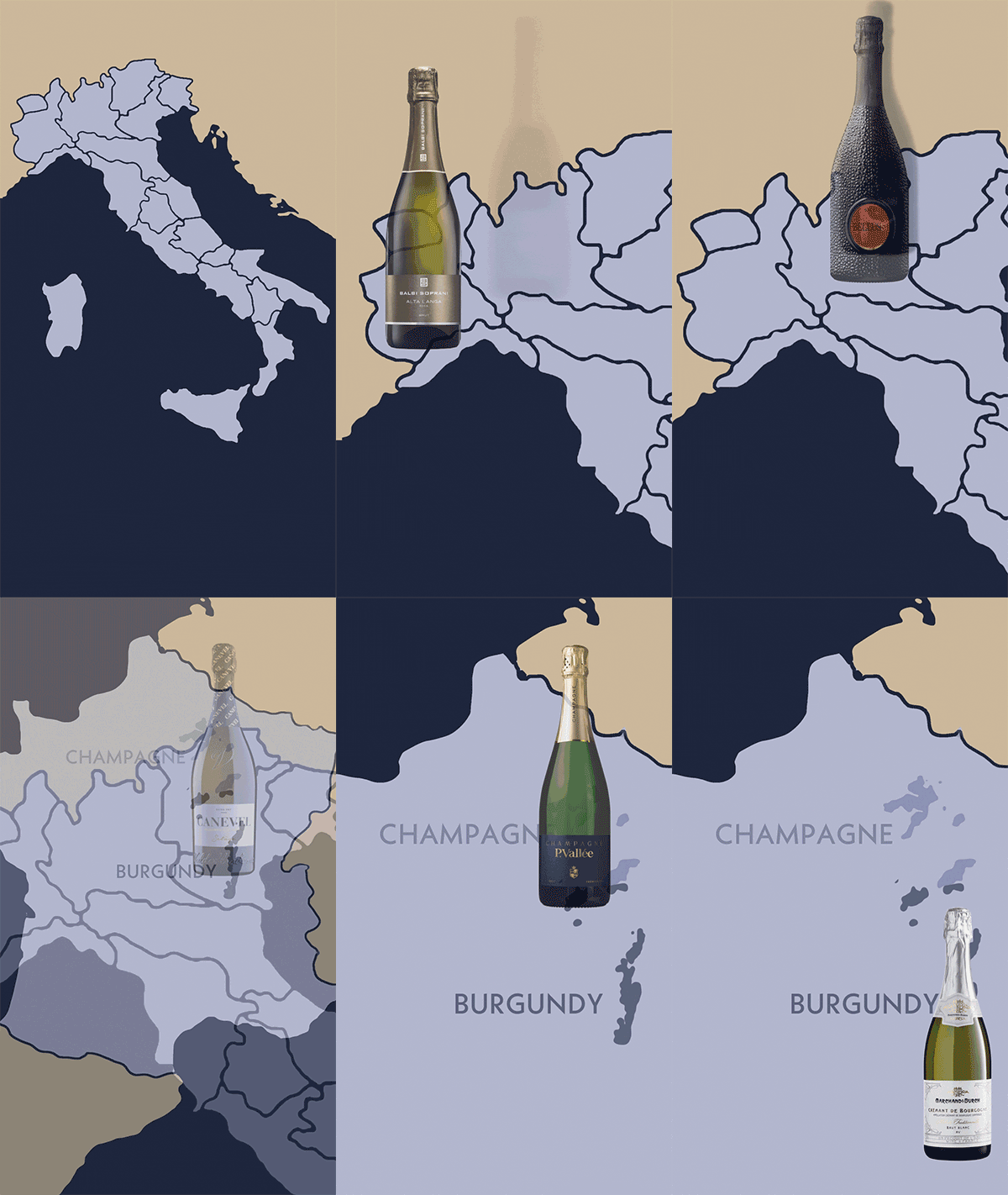
In France, Champagne’s multitude of terroirs and soil types particularly honed to the production of Chardonnay and Pinot Noir were the birthplace of the wine grapes and style most of us associate with sparkling wine today. Bourgogne is a little further to the east and south. Also famed for Chardonnay and Pinot Noir but specialising in still wines, it also produces what many refer to as ‘baby Champagne’, Crémant de Bourgogne.
In Australia, unbound by AOCs, DOCs or other regional structures, anything goes. At Alepat, our more premium sparkling wines are from the cooler zones of Pemberton and Great Southern in Western Australia; Coonawarra in SA; and the Yarra and King Valleys in Victoria.
And we haven’t even started on sparkling reds yet…
Grape Varieties
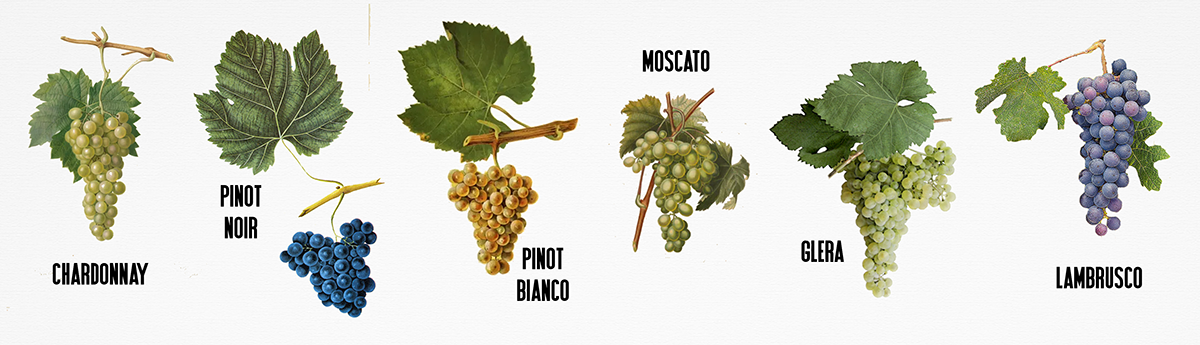
Glera is the star of Prosecco—high in acidity with fresh pear and floral notes. It prefers a light touch in winemaking, with quick fermentation to preserve its delicate character. The grape was imported into Australia in droves after WWII under the name ‘Prosecco’, which is why we still call our King Valley Glera wines by this name.
Chardonnay is a versatile grape that thrives in diverse soils—from Champagne’s chalk to Franciacorta’s glacial moraine. It absorbs terroir and winemaking style beautifully, making it ideal for both blends and iconic sparkling styles like Franciacorta’s Satèn and Champagne’s Blanc de Blancs.
Pinot Noir brings depth and structure to sparkling wines, especially in cooler climates. It’s key for aging potential and adds balance between red fruit and savoury notes. It’s often blended with Chardonnay and sometimes Meunier or Pinot Bianco.
Other Varieties: Pinot Bianco adds finesse in Franciacorta and Alta Langa; Aligoté and Gamay can sometimes be found in Crémant de Bourgogne; Chenin Blanc is a winner in WA sparklings; Lambrusco is Emilia Romagna’s key variety for red or rosé sparklings; and Moscato creates Asti’s lightly spritzed, aromatic style.
Production Methods
Most of our sparkling wines are made using either Charmat or the Traditional method (Méthode Champenoise). Both involve a secondary fermentation to create bubbles—but the key difference is where that fermentation happens.
Charmat occurs in pressurized tanks, resulting in wines that are fresh, fruit-forward, and have a light, frothy mousse. The Traditional Method occurs in the bottle, with extended contact on yeast lees, creating wines that are more developed and complex, with fine, persistent bubbles.